Sunday, 25 May 2025

Magazine cover learner response


 1) Add your finished magazine cover.


2) Type up your feedback from your teacher. If you've received this by email, you can copy and paste it across - WWW and EBI. You don't need to include a mark or grade if you don't want to.

WWW: Your evaluation is strong – you clearly have a clear idea of what you would need to do to improve and that self-awareness will be so valuable next year when doing your coursework. Although it doesn’t match the existing ID covers you have posted, I do like your central image and it does give a nice balance to the cover. There are also a few nice design touches such as using the layer styles to make the cover lines jump off the page a little which are all good techniques for future design work. 


EBI: The image not directly addressing the audience is an issue but you clearly acknowledge this in your evaluation. There are also a few additional areas we can improve on. One is the actual size of the cover as it looks stretched and not A4 – an important one to check for future projects. Although the cover lines are placed on the left correctly, they are not left-aligned which would give a much sharper design to the cover. I would also like you to have written serious cover lines in the style of ID magazine as getting the text and tone right in media production work is so important.


3) Consider your mark against the mark scheme above. What are the strengths of your production based on the the mark scheme? Think about magazine cover conventions and the media language techniques you have used to communicate with your audience (e.g. mise-en-scene, camera shot etc.) Notice the focus on narrative in the mark scheme for Media language.

Narrative matches that of the original by being fashion focused. 

4) Look at the mark scheme again. What can you do to move your mark higher and, if required, move up a level?

Better central image: mise en scene and camera shot

5) What would be one piece of advice you would give a student about to start the same magazine cover project you have just completed?

Take the time to take an actual image for the cover as it’s the main focus and could have a huge impact on ur ability to make a cover that looks similar to the original.

Thursday, 8 May 2025

Magazine Cover Practical

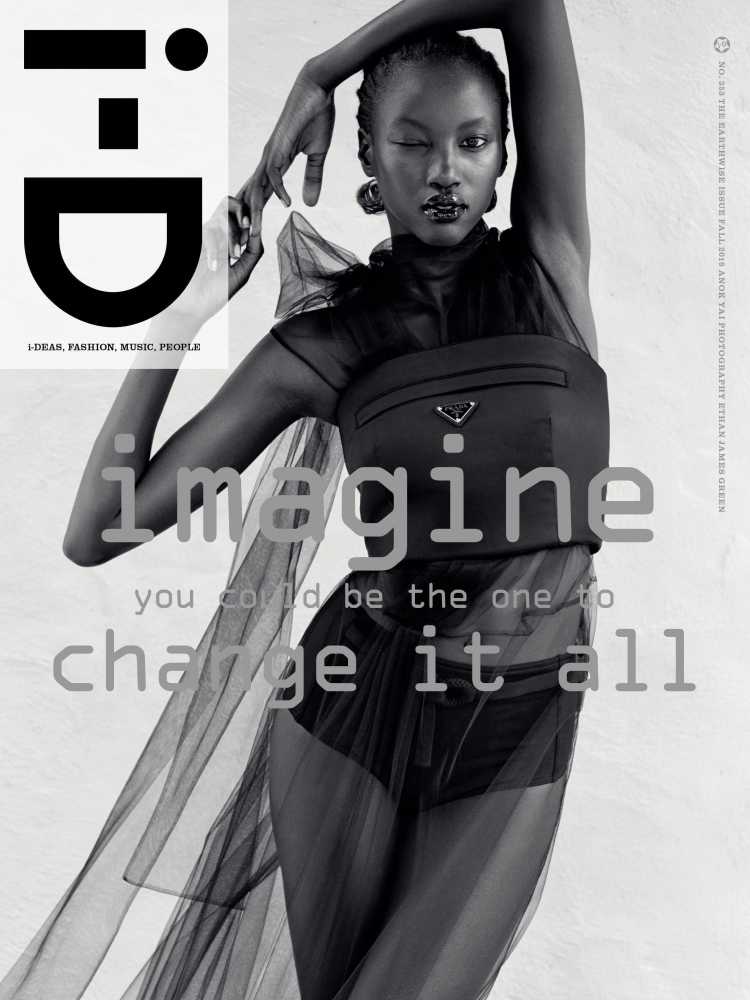
My 3 options for which magazine i would do were: HYPEBEAST, i-D and Highsnobiety as all these magazines focus on youth culture and fashion. 

I decided to do i-D as the other options were heavily focused on Brands and Fashion whereas i-D was focused more on the individual and their identity which was being represented in a single frame. 


1) In your blogpost, write your main cover line (also called the 'main flash') - this is the main cover story that links to your central image. It must be 100% original - all your own words.

From my research I've found that i-D magazines don't usually have a main cover line and instead they focus on the image and the contents of the magazine.

2) Briefly plan the image you will need for the cover - model, costume, make-up, lighting etc. At this point, simply describe the image you need to capture.

A full body shot photo focused on the outfit and a wide shot to show the setting.

3) Write the cover lines and any additional text you need for your magazine cover.

For my text I'm taking a a more humorous approach and decided to make the names and the contents centred around how amazing I am. I did this by using the text in the top right where it usually discusses models/the names of people the magazine stories are focused on to write my own name multiple times: "The amazing Dennis" "The Iconic Dennis". Then for the contents information I followed the same idea by focusing all the stories on me: "Why Denis is so amazing" "Why 2007 is the greatest year in all of history (Dennis was born)".


As I wasn’t able to do a photoshoot I had to improvise and find a picture which matched the magazine I had chosen. I chose this image because i believe it reflects youth culture with the city background and the outfit being the focus.

I believe I did well with what I had to work with and the cover i made isn’t exactly perfect but i do think it looks somewhat professional. I took certain aspects from different existing cover i saw such as the teared paper effect to uncover big names included in the magazine and having an insight into the contents on the left which i saw on majority of the existing covers. I tried to use the same fonts as the originals but I had to settle for something similar as I wasn’t able to find them. 

If I had to do this practical again I’d have waited and used the in school equipment to do a photoshoot as I believe that would’ve made my work look much more professional and it would’ve allowed me to be more creative with my editing and let me choose where I want to place things. This is because the magazine logo is usually on the left in the real magazines but with my image it had to go on the right to not make the left too crowded and cover up the image. 

Friday, 25 April 2025

Blog tasks: Sephora Black Beauty Is Beauty CSP

 1) What was Sephora trying to achieve with the campaign?

They wanted to show their support for black beauty culture after a scandal that occurred with a black celebrity. 

2) What scenes from the advert are highlighted as particularly significant in the articles?

Beauty parlour: Opens in a salon with Black women under dryers—evokes heritage and everyday Black beauty rituals.

Drag show dressing room: Shows drag queens doing makeup—emphasises queer and Black influence on beauty trends.
Black mother with her daughter: Represents generational knowledge and care in Black families.
Vogueing at a drag ball: Highlights the origin of popular beauty/dance culture in Black and queer communities.
White person applying a cut crease: pointing out how mainstream trends stem from Black creativity.
Reference to Lyda D. Newman: Acknowledges her invention of the hairbrush—celebrates overlooked Black historical figures in beauty


3) As well as YouTube, what TV channels and networks did the advert appear on?

American channels such as: BET, OWN, HBO Max and Hulu
Social media such as: Instagram and Facebook

4) Why does the Refinery29 article suggest the advert 'doesn't feel performative'? 

The advert was created outside of Black History month which shows a year round commitment to black history. It was also made by a black female director which can be seen through the authenticity of the story telling and the history aspect of it.

5) What is the 15 per cent pledge and why is it significant?

The 15% pledge is a pledge for retailers to reserve 15% of shelf space for products sold by black owned businesses.


1) How does the advert use camerawork to communicate key messages about the brand?

It uses the camerawork to do this by using close ups of certain key aspects to emphasise their knowledge and what they’ve included in their advert to show they know what they’re saying and aren’t just doing it as a performance.

2) How is mise-en-scene used to create meanings about black beauty and culture?

Mise en scene can be seen being used through the settings: The beauty parlour which is a key aspect in everyday black culture and the regular home settings such as the bedroom/bathroom to make it feel more personal. 
It’s also using the props: the hair styling equipment which were made by black inventors to show support for those who are not recognised for their inventions.
Actors expressions: Throughout the whole advert we see multiple scenes where people are doing their routines together and smiling with eachother which shows a sense of community and love connected to black culture. 

3) How is editing used to create juxtapositions and meanings in the advert?

It uses editing such as the split screen effect to show both scenes at the same time and this is done to show how black culture has influenced todays social media trends and other people’s lifestyles. 

4) How are verbal codes used to create meanings in the advert - the voiceover and text on screen? 

 They use verbal codes to highlight historical black figures and give recognition to them as in the past people have ignored their input to the beauty industry and given credit to those who stole their ideas. 

5) What is the overall message of the advert? 

The overall message is that black beauty has had a massive impact on the beauty industry and the way people see beauty today. This is shown when the voice over says “What is beauty without black beauty?” which is emphasising this idea that black beauty has heavily influenced todays culture.


1) Look at the exam hint on the first page. How does Sephora as a brand and the CSP specifically reflect contemporary social and cultural contexts? 

The advert is used to show a different representation of black culture and give people an insight into black beauty to help move away from the Eurocentric beauty standard and bring inclusivity to the beauty industry. 

2) Media theory: how are Butler, Gauntlett, bell hooks and Gilroy applied to the CSP?

The advert embraces gender fluidity which supports Butlers claim that gender is nothing but a performance. 
Gauntlett- identity, the different representations shown to help build identity through media.
hooks- the advert challenges the idea of black beauty being marginal.
Gilroy- Advert challenges Eurocentric beauty standards and the racial hierarchy

3) What aspects of media language are highlighted on page 3 of the factsheet? 

 Mise en Scene: Settings like salons and kitchens, props like brushes and makeup, and warm lighting are used to evoke authenticity, history, and cultural pride.

Camera movement: pans,  close ups, and split screens convey intimacy, and highlight beauty tools and rituals


4) How does the factsheet summarise the advert on the final page?

The advert is focused on inclusivity and diversity which diverts from the conventional advert which would focus on the product. This is due to Sephora trying to deal with past racial controversies. 

5) What are the four ideologies in advertising highlighted in task 8 on the final page of the factsheet? In your opinion, do you feel the Sephora CSP advert challenges or reinforces each of these?  
 
Consumerism, Identity, Capitalism, Gender Fluidity. 
I believe the advert reinforces all of these 4 ideologies. Firstly, Consumerism and identity are linked in the advert by showing people express their personal identity through the use of beauty products which promotes their items and makes people think they need to buy products to help express who they are or for who they are. Then capitalism is also reinforced as Sephora themselves are a multi billion dollar company which is only possible thanks to capitalism. Finally, Gender Fluidity is also reinforced through the use of drag queens throughout the advert and promoting the idea that make up isn’t just for women.

Wednesday, 2 April 2025

Introduction to Postcolonialism: blog tasks

 1) Look at the first page. What is colonialism - also known as cultural imperialism? 

Colonialism is when countries take over "undiscovered lands" and claim them as their own.

2) Now look at the second page. What is postcolonialism? 

Post colonialism is the time after colonialism ended. The most popular definition in the UK is the time after India gaining independence as with India being its biggest colony, this was seen as the end of colonialism.

3) How does Paul Gilroy suggest postcolonialism influences British culture?

Gilroy believes that post-colonialism had a negative impact on British culture as people couldnt get used to not being a global superpower which led to them having a hatred towards people of different backgrounds.

4) What is 'othering'?

Othering is the idea that something is different to us due to it being different to our social norms, people considered as othered are displaced and left out of the dominant social group.

5) What examples of 'othering' are provided by the article?

The example of othering given is the othering of British immigrants from British society which was used by politicians such as Farage to gain popularity through hate.

6) What is 'double consciousness'? 

The feeling of not fitting in with either your own culture or the culture of the country you live in.

7) What are 'racial hierarchies'?

Racial hierarchies is an idea heavily established postcolonialism and is the idea that some races are better than others.

8) What examples from recent media products challenge the idea of racial hierarchies? 

In Brooklyn 99 there's an episode where one of the lead characters is racially profiled by another police officer who is white and believes he has power over him. However, he later finds out he is a detective which is higher in the police hierarchy and challenges the idea that white people are better than people of colour as he manages to get justice for what happened.

Thursday, 20 March 2025

Advertising: David Gauntlett and masculinity


1) What examples does Gauntlett provide of the "decline of tradition"?

Women no longer seen as house wives now seen as having 'Girl power' and the idea of men being masculine and tough is being removed and replaced by the idea that men should have emotions and be allowed to express themselves.

2) How does Gauntlett suggest the media influences the way we construct our own identities?

The media helps construct our identities by making people feel lie they need to decide what their identity and lifestyle will be through the use of TV and magazines. People consciously and subconsciously pick things out from these products and implement them into their personality/lifestyle. 

3) What does Gauntlett suggest regarding generational differences? Is it a good thing that the media seems to promote modern liberal values?

Gauntlett claims that the promotion of liberal values in the media is a good thing for young people but he doesn't think the effects of it are seen in older age groups. Older age groups don't consume the media in the same way and are stuck with older views such as traditional gender roles and homophobia which aren't a part of liberal ideology.

4) Why does Gauntlett suggest that masculinity is NOT in crisis?

He claims masculinity is not in a crisis and is just evolving and adapting to modern demands; he believes men are failing to modernise/keep up with the new demands. 

5) Does advertising still reinforce the "conventionally rugged, super-independent, extra-strong macho man" that Gauntlett discusses? Offer examples for both sides of the argument from the wider advertising industry.

Advertising still promotes the idea of strong men but the way in which they do it has changed. The same example of an advert can be used to explain this as in Stormzy's H.I.T.H concert poster hes shown as being a physically strong man but the idea of the macho man extends into men's emotions which weren't shown in advertising before. Despite this, Stormzy is seen to have his head down ad look hurt/sad which isn't part of the traditional macho man idea but more so part of the new ideology which wasn't widely accepted in the media in the past. This shows that brave men are still being portrayed in media but the idea of what a brave masculine man is has evolved.

6) Gauntlett discusses the idea of 'girl power' and offers examples from music and film. Does advertising provide evidence to support the idea of 'girl power' or is the industry still reinforcing traditional representations of men and women?

Women are being told by the media that they need to be independent and do what they want but they're still being told that they need to adhere to the unrealistic beauty standards seen in advertising and other media which has a negative impact on them and takes away from the idea of girl power.

7) Do you agree with Gauntlett's argument under 'Popular feminism, women and men' where he suggests that younger generations are not threatened by traditional gender roles and are comfortable with social changes? Does advertising provide examples either reinforcing or challenging this idea that younger generations are more comfortable with changing gender roles?

The new generation of men are being brought up to see women as equals in society and don't feel threatened by this social change because its what they were taught and what they've seen their entire lives. This can be seen in advertising such as the Gillette 'The best a man can be' advertising campaign which portrayed men as being masculine but also redefines what masculinity is, making it a good thing which benefits everyone in society rather than toxic and harmful to women.

8) What examples from advertising does Gauntlett provide for the changing nature of gender in society (from the section on Judith Butler's Gender trouble)?

CK one fragrance advert shows a change in the nature of gender as it promotes the idea of men and women being similar as they're both able to use the same fragrance. 

9) Why is advertising such a good example of the 'contradictory elements' that Gauntlett discusses with regards to the mass media? In other words, how does advertising continue to both reinforce and challenge gender stereotypes?

There is an enormous range of media products available so its difficult to say whether they all reinforce or subvert from gender stereotypes as theyre all made by different companies and by people with different ideas/life experiences.

10) Finally, Gauntlett makes a clear case that things change and modern identities are increasingly fluid. What is your opinion on this debate - do you agree that the media reinforces the changing attitudes towards gender and sexuality in society?

I believe media has a very important role in impacting the way gender and sexuality is seen in society and people consume so much media in their day to day life and are guaranteed to be impacted by it whether its conscious or subconscious. However i also believe there are other influences which could be considered more important such as lived experiences and the people in their lives. This is because some people have grown up seeing/being taught that they're better than women or that men are better than them which will stick with them throughout their lives as we learn everything at a young age and its much more difficult to change this as we get older.


Media Magazine: Andrew Tate - Masculinity in crisis?


1) What is misogyny and how does it link to Andrew Tate?

Misogyny is the dislike,contempt or prejudice against women. It links to Andre Tate because he promotes the idea of a strong man and claims to be a misogynist who thinks women belong at home,cant drive and given to a man in marriage which implies they're an object.

2) How does the article suggest Andrew Tate used social media to build up his reputation and following?

He uses social media to post clips of his lifestyle and his ideas to gain a large younger audience.

3) Does Andrew Tate's popularity suggest there is in fact a 'crisis in masculinity' - disagreeing with David Gauntlett's view?

It could indicate that there is a crisis as it shows that young men are being impacted by these more traditional ideas and aren't adapting to new ideologies.

Thursday, 13 March 2025

Blog tasks: Representations of women in advertising

 1) How does Mistry suggest advertising has changed since the mid-1990's?

The gender/sexual orientation of the subject of the advert is more ambiguous.

2) What kinds of female stereotypes were found in advertising in the 1940's and 1950's?

In the 1940/50's traditional stereotypes of women were still being reinforced within the media. Women were represented as housewives and objects who's main desire was to buy household appliances to help her with housework.

3) How did the increasing influence of clothes and make-up change representations of women in advertising?

The influence of clothes/make up meant that women were being taught to focus more on their looks and looks were becoming a key aspect of femininity. Women were also being used as a decoration in adverts. 

4) Which theorist came up with the idea of the 'male gaze' and what does it refer to?

Laura Mulvey - Refers to women being a "spectacle" and just something for men to look at.

5) How did the representation of women change in the 1970's?

In the 1970's there was a new representation of women who were meant to be independent and strong working women.

6) Why does van Zoonen suggest the 'new' representations of women in the 1970's and 1980's were only marginally different from the sexist representations of earlier years?

Women were being represented as being strong and powerful but for the wrong reasons. Adverts were suggesting that women don't actually work and the only reason they have a position of power is due to their looks.

7) What does Barthel suggest regarding advertising and male power?

Barthel suggests that men are represented as being strong and powerful whereas women are being portrayed as objects that are decorative and only there for male satisfaction which is similar to Mulvey's male gaze theory.

8) What does Richard Dyer suggest about the 'femme fatale' representation of women in adverts such as Christian Dior make-up?

The femme fatale representation in the Dior advert is heavily criticised by Dyer as he believes the advert is making it seem as though women's sexuality is liberating them and they're doing it for their own pleasure not for a man but this still makes it seem like women are objects that are just here for male pleasure.


1) What was the Protein World 'Beach Bodies' campaign and why was it controversial?
The my protein beach bodies ad campaign was controversial because it promoted women having to have "beach bodies" and look perfect and it played on their insecurities to make them believe they had to spend £62 to be happy.


2) What was the Dove Real Beauty campaign?
The dove real beauty campaign used a sketch artist who drew women twice, once based off their own perception of themselves sand one based off another persons view of them. This study found that women often described themselves as being worse looking than how strangers saw them.


3) How has social media changed the way audiences can interact with advertising campaigns? 
The internet has made it so the we see ads all the time and social media allows people to call out brands and discuss issues with advertising campaigns. 


4) How can we apply van Zoonen's feminist theory and Stuart Hall's reception theory to these case studies?

We can apply them because they represent women as being defined by tyheir looks and they link to these theories which theorise that women are only in adverts for mens enjoyment.

5) Through studying the social and historical context of women in advertising, do you think representations of women in advertising have changed in the last 60 years?

I believe they have but im not sure if its improving. We've moved away from one negative stereotype but moved on to another which is equally as bad. In the past women were stereotyped as being housewives but now women are constantly being presented as objects and using their sexuality in advertising has become normalised

Video games final index

  1)   Videogames: Henry Jenkins - fandom and participatory culture 2)  Videogames: The Sims FreePlay - Language & Representation 3)  Vi...